
Laos
When is the best time to go to Laos?
Laos can be visited year-round, but it has two main seasons: the dry season (October to April) and the wet season (May to September). The hottest period is typically from March to June. Rain during the wet season starts off light and becomes heavier later in the summer. Northern regions tend to be cooler due to higher elevation, while the south is warmer. During the coolest months (December and January), temperatures can drop to around 62°F (17°C) in the north and 73°F (23°C) in the south.
What are accommodations like?
Accommodations range from charming, locally owned guesthouses and family-run bed and breakfasts to boutique and luxury hotels. Most places offer private bathrooms, hot water, and comfortable rooms, though simpler conditions may apply in rural homestays.
Do I need a converter or adapter for electricity?
Yes. Laos uses 230V electricity with multiple socket types (A, B, C, E, and F), so bringing a universal adapter and possibly a converter is recommended.
What type of food is typical in Laos?
Lao cuisine is flavorful and shares similarities with northern Thai food. Staples include sticky rice, fresh vegetables, herbs, and dishes flavored with fermented fish sauce (padaek). Common ingredients include lemongrass, chili, lime leaves, and garlic. Meats like chicken, pork, duck, and fish are often grilled or added in small portions. Soups, salads, and noodle dishes are also widely enjoyed.
How safe is Laos?
Laos is generally very safe, both in cities and rural areas. Crime rates are low, though pickpocketing can occur in busy markets. Basic precautions—like keeping valuables secure—are recommended. Travel Insurance is recommended. Check here.
Is the water safe to drink?
No, tap water is not considered safe to drink. Bottled water is widely available and should be used for drinking and even brushing your teeth.
Can I use U.S. dollars or do I need local currency?
The official currency is the Lao kip (LAK). U.S. dollars are sometimes accepted in larger cities, but it’s best to exchange money locally. Keep in mind that Lao kip cannot be exchanged outside the country, and damaged foreign bills may not be accepted.
Should I bring cash or traveler’s checks? Are ATMs available?
Cash is essential. ATMs are available in major cities like Vientiane and Luang Prabang, dispensing local currency. Credit cards are accepted in some hotels and upscale businesses, often with added fees. Traveler’s checks can be exchanged at banks but are less commonly used.
Can I use my cell phone?
Coverage is generally available in major towns, but may be limited in rural areas. Check with your provider before traveling. Alternatively, you can purchase a local SIM card or rent a Wi-Fi device.
Do I need a visa or passport?
Yes. Most travelers need a visa, which can often be obtained on arrival for stays up to 30 days. A passport valid for at least six months beyond your travel dates is required, along with a passport photo. Check requirements here.
What immunizations are required or recommended?
No vaccinations are strictly required unless arriving from a country with yellow fever risk. Recommended vaccines may include hepatitis A and typhoid. Consult your doctor for the latest advice.
What time zone is Laos in?
Laos operates on Indochina Time (UTC+7), which is 7 hours ahead of London and 12 hours ahead of New York.
Will I manage if I only speak English?
English is spoken in many tourist areas, though not everywhere. French is also somewhat common. Learning a few local phrases is appreciated, and guides are helpful for more remote travel.
Is internet access reliable?
Internet is available in most towns, but speeds can be slow. Patience is often required.
Will Laos feel like a culture shock?
It can be different from what you’re used to, but locals are welcoming and understanding. Respect local customs, such as dressing modestly at temples, removing shoes when required, and avoiding pointing with your feet or touching someone’s head.
What is the climate like?
Laos has a tropical climate with a monsoon season from May to October. Rain doesn’t usually last all day, but conditions can be humid. Temperatures are generally warm year-round, though it can feel cooler in the rain or at higher elevations.
Is travel in Laos expensive?
No, Laos is considered a very affordable destination.
Should I tip in Laos?
Tipping is not expected but is appreciated for good service.
Are there common scams?
Some travelers may encounter overcharging, particularly with taxis. Always agree on a price beforehand.
Will I enjoy shopping?
Yes. While cities have modern shops, local markets are popular for handicrafts and souvenirs. Bargaining is common but should be done respectfully.
Vietnam
Do I need to speak Vietnamese to get around?
Learning basic Vietnamese phrases is helpful, but English is widely spoken in tourist areas, hotels, and major cities. Street signs and transportation often include English translations.
Should I purchase travel insurance?
Travel insurance is not required but highly recommended. You can purchase travel insurance here
What is common to eat in Vietnam?
Famous dishes include pho (noodle soup), banh mi (Vietnamese sandwich), fresh spring rolls, bun cha (grilled pork with noodles), and seafood specialties along the coast.
What language is spoken in Vietnam?
Vietnamese is the official language, though English is increasingly common in tourist areas.
Is tipping expected in Vietnam?
Tipping is not mandatory but appreciated for good service in restaurants, hotels, and for guides or drivers.
Is tap water safe to drink in Vietnam?
No, tap water is not safe to drink. Stick to bottled or boiled water.
What is the dress code in Vietnam?
Casual attire is suitable for most activities, but modest clothing is recommended at temples and religious sites.
Is Vietnam safe for tourists?
Yes, Vietnam is generally safe for tourists. Exercise caution in crowded areas and markets to avoid pickpocketing.
What public transportation options are in Vietnam?
Vietnam has buses, taxis, ride-hailing apps, and domestic flights connecting major cities. Motorbike rentals are common for short trips.
What is the proper etiquette when dining out?
Wait for the host to start eating, avoid sticking chopsticks upright in rice, and it is polite to try a little of each dish offered.
Do I need a Visa to visit Vietnam?
Yes, most travelers need a visa to visit. Check specific requirements for your country Click Here
Cambodia
Do I need to speak Khmer to get around?
Learning a few basic Khmer phrases is helpful, but English is widely spoken in tourist areas, hotels, and major attractions. Many signs include English translations.
Should I purchase travel insurance?
Travel insurance is not required but highly recommended. You can purchase travel insurance here
What is common to eat in Cambodia?
Popular dishes include amok (curry fish), lok lak (stir-fried beef), num banh chok (rice noodle dish), and fresh seafood. Street food markets offer a variety of local specialties.
What language is spoken in Cambodia?
Khmer is the official language, but English is commonly used in tourist areas.
Is tipping expected in Cambodia?
Tipping is not customary but appreciated for exceptional service, especially for guides, drivers, and hotel staff.
What is the dress code in Cambodia?
Casual attire is suitable for most activities, but modest clothing is recommended when visiting temples and religious sites.
Is Cambodia safe for tourists?
Yes, Cambodia is generally safe for tourists. Be cautious of pickpockets in crowded areas and scams near major attractions.
What public transportation options are in Cambodia?
Tuk-tuks, taxis, and ride-hailing apps are common for city travel. Buses connect major cities and tourist destinations.
What is the proper etiquette when dining out?
Wait for the host to start eating, avoid touching food with your left hand, and it is polite to try a little of each dish offered.
Do I need a Visa to visit Cambodia?
Yes, most travelers need a visa. Check specific requirements for your country Click Here
When is the best time to go to Cambodia?
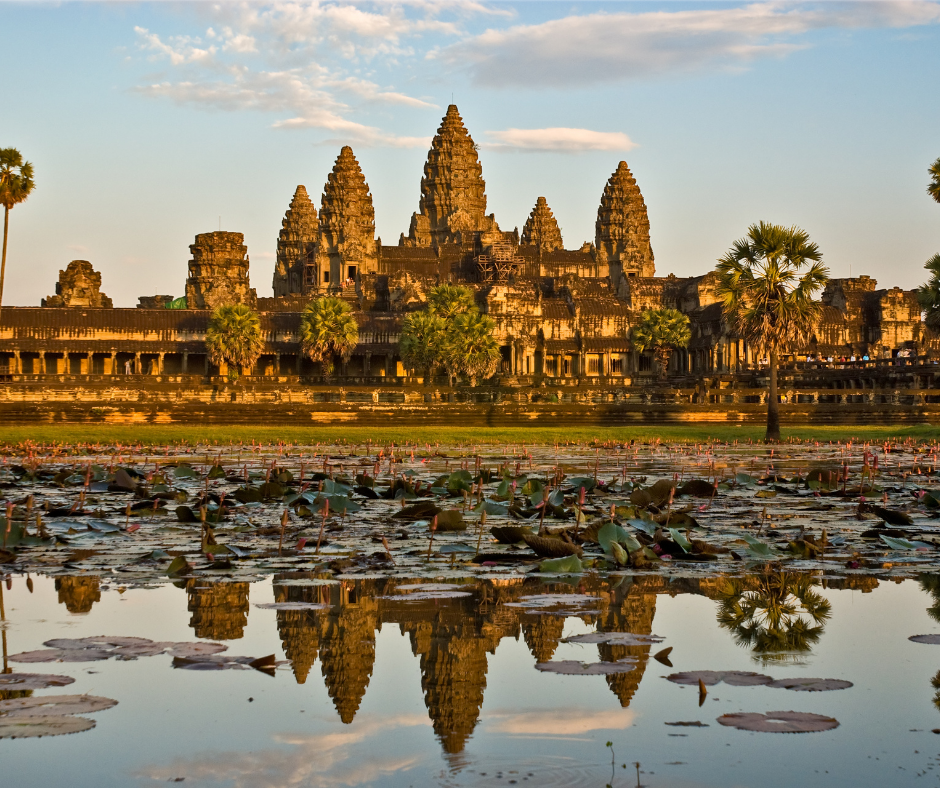
The ideal time to visit Cambodia is during the dry season from October to April, when conditions are more comfortable for travel. Early summer (May–June) can also be a good option if you don’t mind the heat and occasional बारिश, with the added benefit of fewer crowds and better wildlife viewing—especially around places like Angkor Wat and Phnom Penh. The monsoon season (July–September) is generally less favorable, as heavy rain occurs frequently, sometimes on most days.
Do I need a converter/adapter for the electricity?
Cambodia operates on 230V, 50Hz electricity and uses A, C, and G type sockets. It’s advisable to bring a universal adapter or converter to ensure compatibility with your devices.
What type of food is typical of Cambodia?
Cambodian (Khmer) cuisine shares similarities with Thai and Lao food but is typically milder in spice. There are plenty of unique local dishes to explore, and vegetarian options are widely available due to the country’s strong Buddhist influence.
Is the water safe to drink?
Tap water in Cambodia is generally not safe to drink. Bottled water is easy to find in hotels, restaurants, and tourist areas. Many places also provide boiled water or tea with meals. For extra caution, it’s best to use bottled water even when brushing your teeth.
Can I use US dollars or do I need local currency?
The official currency is the Cambodian Riel, but US dollars are commonly accepted and often preferred, especially in larger establishments. It’s useful to carry small denominations of both USD and Riel for everyday purchases.
What time zone is Cambodia?
Cambodia follows Indochina Time (ICT), which is UTC+07:00.
What is the most practiced religion in Cambodia?
Buddhism is the dominant religion, practiced by about 97% of the population. There are also smaller communities of Muslims (mainly Cham people), as well as Christian and animist groups.
What is the typical dress of Cambodians?
Daily clothing in Cambodia is similar to Western styles. However, traditional attire is often worn during ceremonies, weddings, and formal occasions.
What is the agriculture of Cambodia?
Agriculture plays a key role in Cambodia’s economy. Major products include rice, corn, and tobacco, along with meat, fish, dairy, sugar, and flour. Coffee is also grown in regions like Mondulkiri and Ratanakiri.
Which language is closest to Khmer?
Khmer belongs to the Mon-Khmer branch of the Austroasiatic language family. Vietnamese is the closest widely spoken language within this group.
What is the currency of Cambodia?
The Cambodian Riel is used in paper denominations ranging from 100 to 100,000. While exchange rates can vary, it’s roughly around 4,000 Riel to 1 USD.
What is the weather like?
Expect hot and humid conditions, with daytime temperatures often in the high 80s to 90s °F. Short daily rain showers are common, especially during wetter months, and can provide a refreshing break from the heat.
Is it safe to travel in Cambodia?
Cambodia is generally considered safe for travelers, though it’s still important to take standard precautions as you would in any destination.